
Pienza, Pius II and Rossellino’s Renaissance town
Pienza is a Renaissance town in the Val d’Orcia, shaped from 1459 when Pope Pius II commissioned Bernardo Rossellino to remodel his birthplace, Corsignano. The central square makes a useful starting point: the cathedral and palaces belong to a deliberate urban composition rather than a collection of unrelated monuments.
Pienza’s historic centre became a UNESCO World Heritage Site in 1996. The wider Val d’Orcia landscape received its own inscription in 2004. Keep those two scales in mind during a visit: the town explains Renaissance planning, while the surrounding farms, hills and settlements reveal a landscape still used for agriculture. A town walk and a countryside outing answer different interests.
Pienza cathedral, Piazza Pio II and the palaces
Pienza cathedral combines a Renaissance exterior with an interior influenced by southern German late Gothic architecture. Piazza Pio II also brings together Palazzo Piccolomini and Palazzo Borgia. Begin with the relationship between the buildings and square, then choose which interiors deserve a separate part of your day.
Palazzo Piccolomini’s published standard admission was €7 when consulted on 14 November 2026. The Città di Luce All Inclusive Pass covers Palazzo Piccolomini and its garden, Palazzo Borgia with the diocesan museum, the cathedral, crypt and labyrinth, with an audio guide. Choose by the places you intend to enter, rather than treating a countryside excursion as a ticket to these buildings. The Pieve di Corsignano and the archaeological museum in the former Conservatorio San Carlo are further possibilities for a more focused visit.
A local cooking class
This cooking class near Pienza includes a lunch made during the lesson.
Hand-picked tours, booked through GetYourGuide. Prices are indicative starting prices in euros (as of November 2026). Tap a tour for live availability and the current price in your currency.
A cooking activity near Pienza
A countryside cooking class pairs hands-on preparation with lunch made during the session.
Pecorino, pici and a countryside cooking class
Pienza’s food traditions include Pecorino and pici, the thick handmade pasta associated with the area. Saffron, truffles and Cinta Senese cured meats also belong to the regional food context. Pecorino sold under the town’s name comes in different forms; one raw-milk producer example should not be taken as a rule for every cheese.
The cooking class at an agriturismo near Pienza lasts 2.5 hours and includes a recipe guide, souvenir apron and lunch made from the dishes prepared during the class. Drinks are extra. Treat the class as a separate rural activity alongside the town visit, with its own meeting point on the road towards Cosona. For a different food-related outing, compare the Montalcino wine tastings, keeping transport separate from drinking.
Walking, viewpoints and Vitaleta without crossing fields
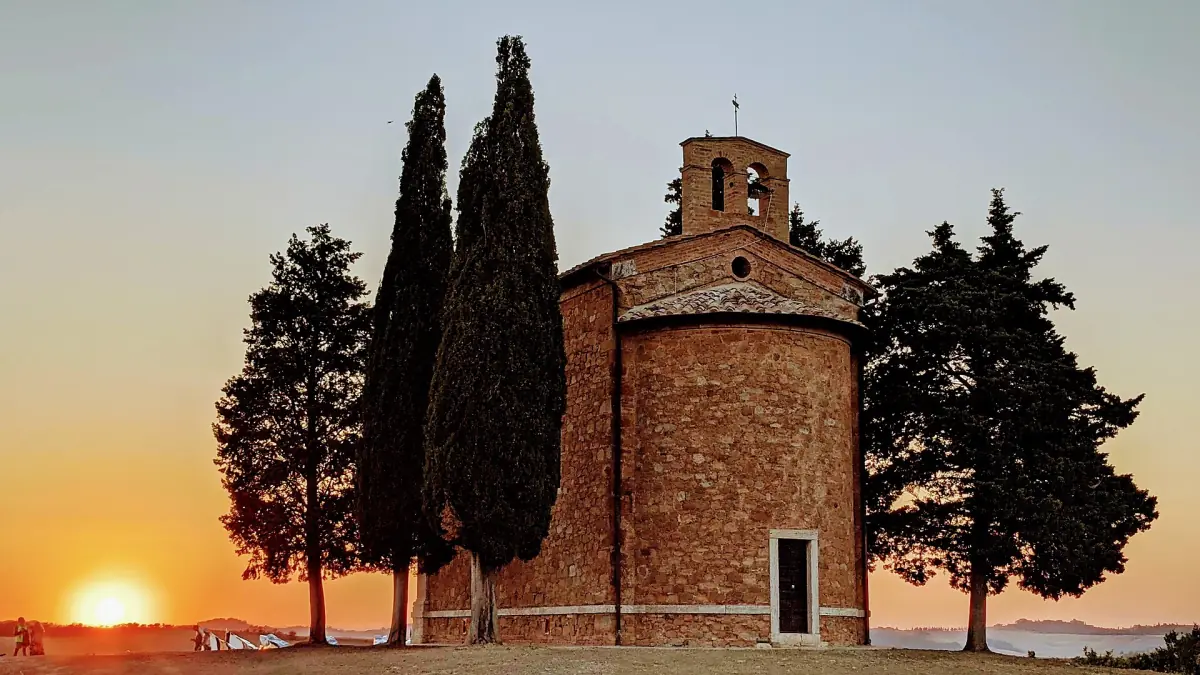
Pienza offers a town-based introduction to the surrounding hills, while Vitaleta is a separate countryside destination. The chapel shown in the photograph is Vitaleta, not Pienza cathedral. Its present building was consecrated in 1885 after rebuilding by Giovanni Partini in the nineteenth century.
Vitaleta is privately owned and described as publicly accessible, with walking and gravel approaches from the SP 146 or SR 2. Use the described paths and respect event restrictions; countryside views do not give permission to enter cultivated land. Interior access needs its own planning. The Val d’Orcia overview puts Vitaleta and the cypress viewpoints into the wider landscape, without turning a photograph into an access promise.
Parking and visiting times in Pienza
Pienza visitor parking includes the paid areas on Via degli Archi and Via Mario Mencattelli. Spaces along the old town walls are reserved for residents. Plan to leave the car in an authorised area and continue on foot; a room reservation alone is not a ZTL driving permit.
Palazzo Piccolomini publishes a seasonal calendar without a year attached, including closure periods from 16 to 30 November and 7 January to 14 February. Consult the calendar for your intended visit rather than building a winter day around an assumed opening. For the next part of the trip, compare Bagno Vignoni with the town visit and choose a suitable base using the accommodation guide.
Questions about your visit
What makes Pienza different from the surrounding valley?
Pienza is the planned Renaissance town remodelled for Pope Pius II from 1459, with its own UNESCO inscription from 1996. The wider Val d’Orcia inscription dates to 2004 and concerns the cultural landscape. Start with Piazza Pio II for architecture, then plan countryside views as a separate outing.
How should I combine Pienza with the cooking class?
Pienza’s cooking class takes place at an agriturismo outside the town, so give the activity its own place in the day. The 2.5-hour session includes a recipe guide, apron and the lunch you prepare. Keep travel to the rural meeting point separate from time reserved for the cathedral and palaces.
Where should I leave the car in Pienza?
Pienza has paid parking on Via degli Archi and Via Mario Mencattelli, while spaces beside the historic walls are reserved for residents. Choose an authorised visitor area before walking into town. If staying inside a restricted zone, arrange the relevant access permission rather than using the accommodation booking as permission.